Lash clusters have brought professional-looking extensions within reach of anyone willing to spend fifteen minutes at a mirror. Choosing the right brand matters more than most people realize; a bad adhesive formula or a stiff lash band can turn a beginner’s first attempt into a nightmare. What follows is a ranking of the best lash cluster brands for first-time users, ordered by how well each one suits someone who’s never done this before.
Getting started with lash clusters
Lash clusters – also called DIY lash extensions or segmented falsies – come in small sections that users apply individually along the lash line, rather than as one continuous strip. The result looks closer to salon extensions than traditional false lashes.
When you’re just starting out, the variables that actually matter are bond formula, cluster flexibility, and how much room for error the product gives you. A stiff cluster placed at even a slightly wrong angle won’t blend into your natural lashes. Flexible bands paired with a latex-free, quick-setting bond are far easier to reposition before everything locks in place. Most home-use kits also throw in a lash applicator and a sealant, both of which have a real impact on wear time.
Starting with a trial size or a starter kit keeps the initial investment low while users figure out which length and curl style works for their eye shape.
1. Lilac St.
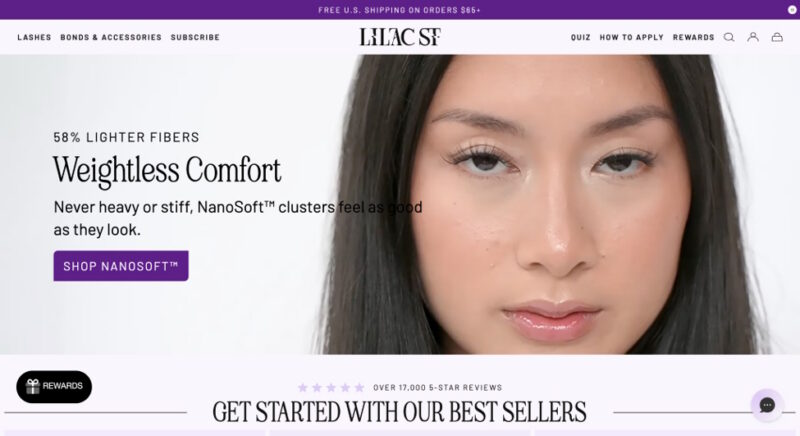 Best for: First-time users who want a complete at-home kit with subscription convenience
Products: DIY lash extension clusters, lash glue, applicators, compact mirrors, travel bags
Standout: High-quality Korean silk construction with flexible cotton thread; quick-drying bond formula
Lilac St. launched in 2020 when founder Alicia Zeng built the brand out of her San Francisco apartment during salon closures. The product line is fully vegan and cruelty-free, which matters to a growing segment of beauty shoppers. All clusters use Korean silk and a flexible cotton thread base, which gives them a natural drape that sits flat against the lash line, a quality first-timers notice immediately compared to stiffer alternatives.
The brand has racked up over 10,000 verified product reviews, and its repeat customer rate climbed 82% year over year – a strong sign that the application experience is good enough to bring people back. Buyers can purchase individual items or sign up for a subscription box, keeping a fresh supply flowing without the hassle of manual reordering. For anyone still building their technique, having the full accessory kit – applicator, glue, mirror- bundled together removes the headache of hunting down each piece separately.
2. Elour Lashes
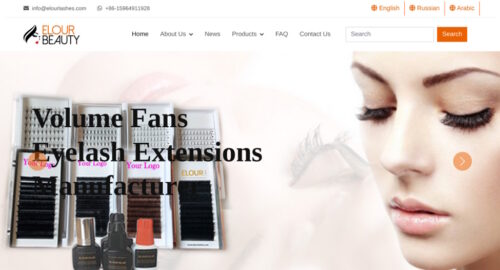
Best for: Brands and retailers sourcing private-label or wholesale cluster lashes in volume
Products: 3D to 8D faux mink, mink fur, silk, human hair, and synthetic clusters; premade fans; Russian volume extensions; magnetic eyeliner
Standout: Over 1,000 styles available; OEM and ODM services for custom branding and packaging
Elour Lashes has been operating out of Qingdao, China since 2005, running a factory that spans 2,000 square meters and employs more than 120 manufacturing workers. The company holds SGS and INTER certifications and supplies over 3,000 brands across 50-plus countries. That kind of scale makes it a serious option for businesses, not casual buyers.
For individual consumers who are new to lash clusters, Elour’s real strength lies in its variety. The catalog runs over 1,000 styles, so resellers stocking beginner-friendly options have no shortage of choices. But direct retail access for first-time personal shoppers isn’t really the point here; the business is built around wholesale and custom OEM/ODM orders. Someone buying a few clusters for personal use will get more out of a consumer-facing brand, while anyone looking to launch their own lash line will find Elour’s manufacturing depth and private-label capabilities genuinely worthwhile. The wholesale and OEM focus means individual consumers may face minimum order requirements or less retail-oriented customer support.
3. Laura’s Lashes
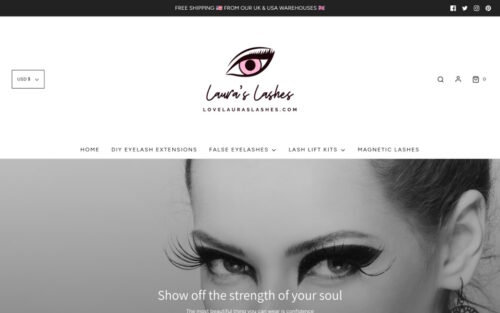
Best for: Users who want to avoid lash glue entirely and prefer magnetic application
Products: Magnetic lashes (with and without eyeliner), self-adhesive lashes, color lashes, DIY extension kits, lash lift kits
Standout: Glue-free magnetic technology; ships from both UK and US warehouses with no minimum order spend
Laura’s Lashes is headquartered in London but fulfills US orders from an American warehouse, which keeps shipping times manageable for customers stateside. The brand’s identity centers on magnetic lash technology, lashes that attach through a magnetized liner or self-adhesion rather than traditional bond glue. Every product is vegan, and reviews on the site consistently point to easy application and comfortable wear.
The glue-free approach is genuinely relevant for beginners who feel anxious about adhesives near the eye or who’ve experienced reactions to latex-based bonds before. Magnetic lashes do carry their own application learning curve, though, and they tend to sit slightly differently on the lash line than glue-set clusters do. The product range also includes lash lift kits and color lashes, giving users options well beyond natural-looking styles. No minimum spend requirement means you can start with a single style and nothing more. Magnetic lashes produce a different finish than traditional glue-applied clusters; the look may feel less polished to users expecting a salon-extension result.
4. Lash Beauty Pro
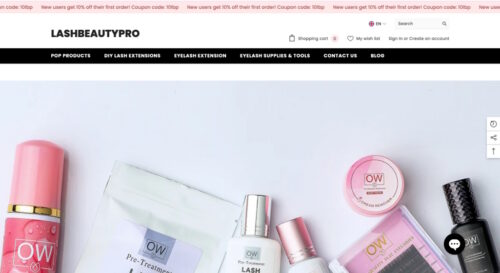
Best for: Salon professionals and advanced home users sourcing professional-grade extensions at wholesale pricing
Products: DIY cluster lash extensions, volume and wispy lashes, premade fans, lash tools, salon furniture, professional adhesives
Standout: PBT fiber construction, cruelty-free; Korean-made liquids; AI price comparison tool; 10% new-user discount
Lash Beauty Pro is a China-based wholesale manufacturer supplying lash studios, salons, and independent retailers. The lashes are made from high-quality PBT fiber and carry a cruelty-free claim, with adhesives and liquids produced in Korea. New customers get 10% off their first order using the code 10lbp, which takes a bit of the edge off the entry cost.
The catalog spans both professional extensions and DIY cluster options, placing the brand somewhere between a pure consumer product and a full professional supply house. Long-term clients have reported urgent custom orders fulfilled within two weeks, and at least one brand partnership on record has run for seven years, both pointing to solid operational consistency. For first-time personal users, the professional focus means some products expect more skill than a standard beginner kit does. Large or custom orders require direct contact rather than standard checkout, and some products are better suited to trained technicians than first-time home users.
5. Heyme Beauty
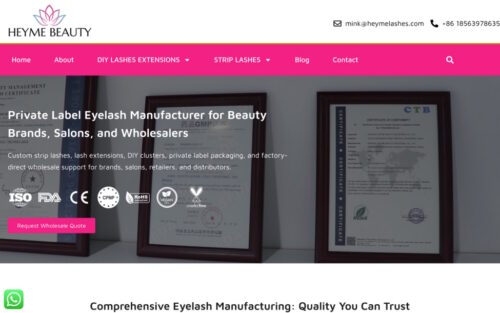
Best for: Businesses and independent brands needing certified, factory-direct clusters with low minimum order quantities
Products: DIY ribbon/cluster lashes, strip lashes (mink, faux, bio plant fiber, magnetic), PBT lash extensions, custom tools, adhesives, and packaging
Standout: CE, FDA, and TUV certified; daily output exceeds 50,000 pairs; MOQs start at 50 pairs; 3 to 5 day wholesale fulfillment
Heyme Beauty operates as the main lash division of HeyMe Beauty Group in China, with a multi-stage quality inspection process covering raw material intake through final product. The certification set (CE, FDA, TUV) is broader than most competitors on this list, which matters for brands that need documentation for retail or import compliance.
A 50-pair minimum order quantity ranks among the lowest available for a factory-direct supplier, making it possible for smaller independent brands to test product without a heavy upfront commitment. Complimentary samples and free logo design for custom packaging add further appeal for anyone building a new line. It’s not the right fit for someone buying a handful of clusters to try at home, but for anyone constructing a product line, Heyme’s capacity, certifications, and low MOQ offer a genuinely practical entry point. The business model is built for wholesale buyers; individual consumer retail orders aren’t the main offering.
What makes lash clusters beginner-friendly
A few specific features separate products that work for first-timers from those that don’t.
Bond formula is the single most important factor. A quick-drying, latex-free adhesive that allows a brief repositioning window before setting firmly will outperform slow-cure glues that slide around. Cluster flexibility counts too, a band that bends with the eye’s natural curve sits flat without leaving gaps. And cluster length variety is more important than people give it credit for; starting with shorter lengths (10 to 12mm) is far more forgiving than jumping straight to 14 to 16mm.
Kit completeness makes a real difference. Buying clusters without an applicator tool adds difficulty. Brands that package the full setup together let beginners focus on technique rather than sourcing accessories separately.
Bottom Line
The best lash cluster brands for first-time users span a wide range, from consumer-focused starter kits to wholesale manufacturers built for beauty businesses. Beginners chasing a polished at-home finish should look for vegan, flexible clusters with a quick-setting bond and a complete accessory kit. Those building a lash brand have more to weigh: manufacturing certifications, MOQ flexibility, and OEM options all become deciding factors. Each brand on this list serves a distinct type of buyer; matching the product to your actual situation is what separates a frustrating first attempt from a result you’d want to repeat.