Category: dance

How to Style Navratri Lehengas with Trendy Crop Tops

How to Style Navratri Lehengas with Trendy Crop Tops

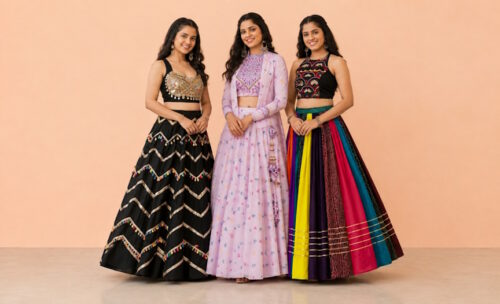
Most women who dance garba have a Chaniya choli they have worn two seasons running. The skirt is usually still fine. It is the choli that dates, or stops fitting the way it did.

And that is why so many women now wear a crop top with their Navratri lehenga instead. It is an easy swap. It costs far less than a new outfit, and you can wear the top with jeans. A readymade lehenga dress will not give you that.

But you do have to pick the top carefully. One that rides up on the third round of raas will ruin your evening. And a busy top over a busy skirt just looks crowded. So, here is how to put a crop top lehenga look together.

Choose the Right Length and Neckline

Your crop top should end at or just above the waistband. Garba involves a lot of arms-overhead movement. So, look for a snug band, a tie-back, or a dori closure that holds its place.

After that, the neckline does most of the styling work. These are the ones that suit garba best:

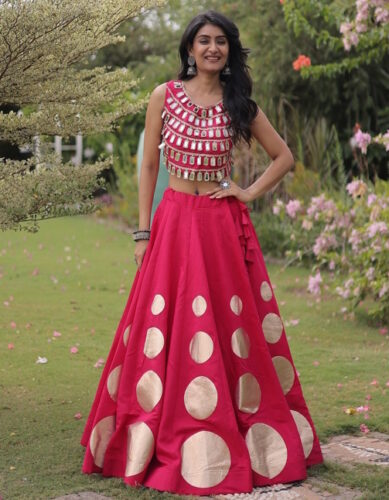
  • Halter Neck: It keeps your shoulders free, and it photographs well under the lights.
  • Square Neck: This one sits well with Kutchi embroidery, so it suits a skirt with folk motifs.
  • One Shoulder: Wear this if you want an Indo-Western feel on a traditional lehenga.
  • Bustier: It is structured and holds its shape. So, it can carry a plain garba lehenga on its own.
How to Style Navratri Lehengas with Trendy Crop Tops

Match Your Crop Top to the Weight of Your Skirt

A chaniya choli for garba usually carries a lot of detail already. Mirror work, Kutchi gamthi patchwork, bandhani and gota patti lace are all common on a chaniya choli for Navratri. So, when the skirt is heavily worked, keep the top plain. A solid cotton or rayon top lets the mirror work show.

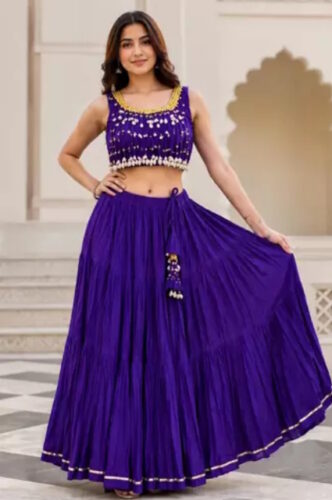
Also, you can reverse this when the skirt is simple. A flared rayon or cotton chaniya makes a good base for an embroidered top or a sequined bustier. Cotton, rayon and chanderi all breathe well, so they keep you comfortable all night.

Pay Attention to the Back and the Sleeves

A crop top shows far more of your back than a choli does. So, the back is worth some thought.

  • Dori Tie-Up: Tie-up backs with latkans are adjustable, so you can fix the fit as the night goes on.
  • Deep U Back: It opens up the back but still reads as traditional. So, it suits family functions.
  • Mirror-Patch Back: The mirrors sit across the back, so they catch the light every time you turn.

Sleeves work the same way, and you have more options than most people use:

  • Bell Sleeves: They flare out and catch air every time you spin.
  • Puff Sleeves: They add height at the shoulder, so they balance a wide paneled skirt.
  • Elbow Sleeves: Wear these if you want coverage without overheating by hour two.
How to Style Navratri Lehengas with Trendy Crop Tops

Style Your Dupatta in Different Ways

A Navratri chaniya choli comes with its own dupatta, and with a crop top it ends up doing a lot of work. There are a few ways to drape it:

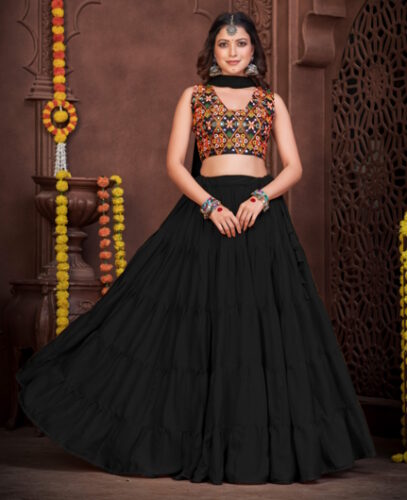
  • Shoulder Pin: Pin one end at the shoulder and let the rest fall behind, so your waistline stays visible.
  • Waist Sash: Knot a lightweight dupatta at the waist, and you get extra flare when you spin.

Cape or Jacket: Or skip the dupatta and layer a short mirror-work cape instead. It is one of the most photographed garba outfits right now.
How to Style Navratri Lehengas with Trendy Crop Tops

Complete the Look with the Right Accessories

Navratri outfits get worn for hours, so whatever you pick has to move with you.

  • Bangles: Stack them up. They suit almost every lehenga choli, and they sound good when you clap.
  • Jhumkas: Long jhumkas swing with your movement. They have been a festive staple for generations.
  • Oxidized Jewellery: Oxidized silver sits well against mirror work and bandhani. It is a safe pick for garba.
  • Kamarbandh: A waist belt sharpens the line between top and skirt, so the whole thing reads as one garba dress.
  • Footwear: Keep it flat. Juttis or embroidered flats will get you through nine nights. Heels will not.
  • Potli Bag: A small potli keeps your hands free for dandiya sticks.

A crop top is one of the easiest ways to refresh a Navratri lehenga you already own. It is comfortable and it is versatile. So, pick a top that stays in place, keep the detail balanced, and choose a sleeve that moves well. Whether you dance one night or all nine, you will be comfortable and you will look festive.
Exploring the Cultural Significance of Samba Dance Attire

Exploring the Cultural Significance of Samba Dance Attire
Image credit

A vibrant and colorful land blessed with diverse cultures, traditions, and art forms that enrich its identity. One such integral art form that manifests the very spirit of Brazil is Samba, a dance that communicates stories of love, joy, and the quintessential culture. This embodiment of effervescent rhythm and fiery spirit, however, is not simply restricted to the steps and music but extends deeply into the Samba dance attire. The cultural significance of these costumes, including understanding samba dance costume, is profound; they tell a tale of the historical progression of Brazil’s spirit, reflecting the diverse influences and socio-economic events that have shaped it over the years.

The Origin of Samba Dance Costume: A Commemoration of Pride

The origins of the Samba dance costume can be traced back to its roots in Africa. Brought to Brazil by African slaves, Samba quickly evolved to become a symbol of resistance and pride among the enslaved population. The dresses took inspiration from the Afro-Brazilian religion, Candomblé, which worshiped Yoruba gods called Orishas. The elaborate headdresses, feathers, and beadwork were originally meant to personify these deities during religious ceremonies. Today, the flamboyant Samba costumes embody this spirit of perseverance and resilience, resonating with the pulsating rhythm of the dance.

A Legacy of Resistance and Cultural Expression

Enslaved African women, clad in the ‘Baiana’ dresses, laid the foundation for what would evolve into the modern Samba attire, blending with diverse cultural influences over time. The simplicity of the white, loose dress paired with a turban not only signified their cultural identity but also reflected their spiritual inclinations rooted in African traditions. As Samba gained popularity and permeated mainstream culture, the attire underwent a striking metamorphosis, transitioning into the dazzling and flamboyant costumes adorning Samba dancers today.

The Evolution of Samba Costume: Fusion of Cultures

As the cultural landscape transformed over time, the Samba dance costume underwent a parallel evolution, embodying a fusion of diverse cultural influences. Drawing from indigenous traditions, European fashion, and Afro-Brazilian aesthetics, the attire became a vibrant amalgamation, mirroring the multifaceted heritage of their populace. This blending of elements seamlessly integrated into the exuberant costumes donned by Samba performers in contemporary times, symbolizing dynamic cultural identity. The Samba dance costume stands as a vivid representation of the nation’s rich tapestry, where traditions converge and innovate, showcasing the enduring spirit of their cultural diversity.

The Festive Carnival Outfits: A Symphonic Burst of Colors

Exploring the Cultural Significance of Samba Dance Attire
Image credit

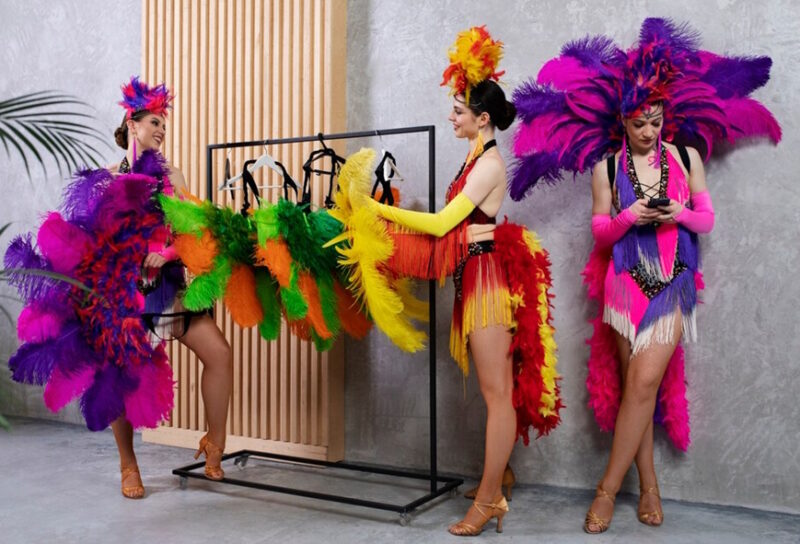
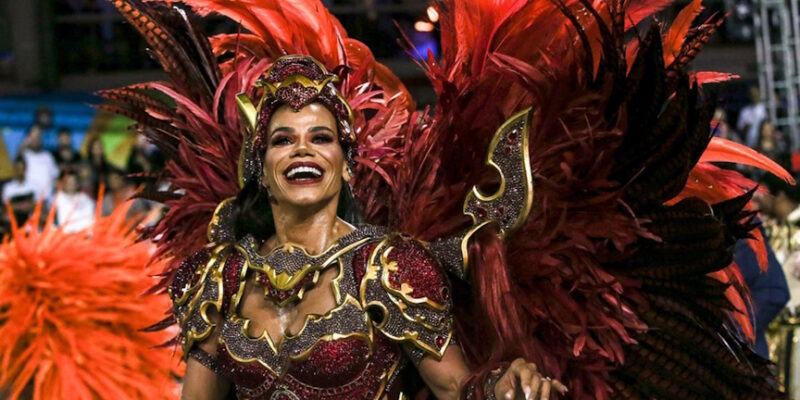
The most globally recognized manifestation of Samba dance attire is seen during the grand spectacle of the Brazilian Carnival. These costumes are a riotous explosion of colors and vivaciousness, designed exclusively for the event. The dancers wear sequined bikinis, feathered headdresses, and voluminous, reflective accessories that glisten in the sun with every beat of the rhythm. This ostentatious display of life was actually born out of economic necessity during the Great Depression when schools representing different neighborhoods began to compete for tourists’ attention with these brilliant displays of opulence.

Symbolism and Significance in Every Stitch

Every detail of the Samba costume is imbued with profound symbolism. The vibrant colors serve as a reflection of the lively essence of Brazilian culture, resonating with the spirit of joy and festivity. Intricate beadwork and sequins not only adorn the attire but also symbolize the resilience and unwavering of determination, reflecting their ability to thrive amidst challenges. Feathers, delicately incorporated into headdresses and shoulder pieces, pay homage to the indigenous tribes, evoking a sense of reverence for their deep-rooted connection to the land and its abundant biodiversity.

Cultural Significance of Samba Dance Attire: An Art of Resistance and Liberation

Each element of Samba dance attire carries cultural significance. Feathers, often used in the headdresses, signify honor, ascension, and the spiritual connection of the dancers with the gods, echoing the religious roots of the dance. Additionally, the bright colors represent the vibrancy and jubilation inherent in culture. During Carnival, each Samba school chooses a specific color theme for their costumes, symbolizing unity, a culture of togetherness and community strength.

Moreover, Samba costumes have played a significant role in liberating women socially. The daring cuts not only showcase the dancer’s athletic abilities but also represent the defiance of conventional norms and societal constraints. The daring, fluorescent bikinis toured the globe, bringing visibility to Brazilian women, and igniting global conversations about body positivity and freedom.

Final Thoughts

Samba dance attire is more than just clothing – it is a cultural emblem, a manifestation of a rich history of survival, adaptation, and resistance. It is an art form that nourishes cultural identity, embodies the vibrant spirit of Brazil and invites the world to share in its joy. Understanding Samba dance costume design in its historical, socioeconomic and cultural context offers an intricate insight into the heart of their culture and its indomitable spirit.