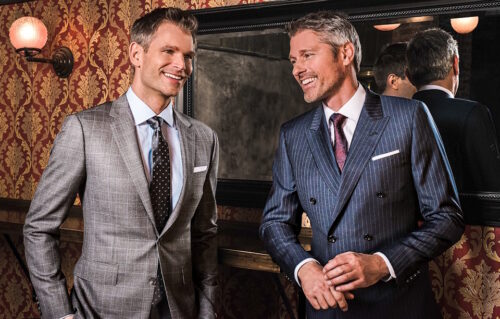
Tag: mens_suits

What Should You Expect at Your First Custom Suit Appointment in NYC?

What Should You Expect at Your First Custom Suit Appointment in NYC

Walking into a custom tailor for the first time can feel unfamiliar, especially if you’ve only ever bought off the rack. The process is slower, more deliberate, and involves a level of detail most people don’t anticipate.

The good news is that it’s also straightforward once you know the structure. Your first custom suit appointment in NYC typically follows five clear stages, and understanding each one before you arrive makes the whole experience far less intimidating.

The Initial Consultation and Fabric Selection

The first stage sets the direction for everything that follows. At NYC bespoke shops, including Alan David bespoke tailoring, or other independent tailoring houses and custom studios across Manhattan, the initial consultation usually focuses on how the suit will be worn, preferred fit, fabric, and budget. This is a working conversation. The tailor wants to understand whether you need something for daily office wear, a wedding, or a formal event, because that shapes every decision from lapel shape to lining.

Fabric selection happens during the same visit. You’ll review swatches from Italian and English mills, wool, wool-cashmere blends, and worsted fabrics in dozens of weights and weaves. A heavier cloth suits a New York winter; a lighter 120s wool works better for year-round wear. Don’t rush this part. The fabric you pick affects how the finished suit looks, feels, and holds its shape over years of use. Most tailors in NYC carry hundreds of options across different price points, so ask to see a range before settling.

Measurements Taken by a Master Tailor

At a bespoke shop, measurements aren’t handled by sales staff. A master tailor or pattern cutter takes every relevant dimension: chest, waist, seat, shoulder width, sleeve pitch, trouser rise, and more. Expect to stand naturally and answer questions about how you prefer the jacket to sit (snug through the waist, a bit more room through the chest, a slightly higher trouser break). These preferences get recorded alongside your numbers.

This is the step that truly separates bespoke from custom. Custom simply adjusts an existing pattern to rough measurements; bespoke cuts an entirely new pattern built around your specific body. That difference matters most when one shoulder sits lower than the other, your torso runs longer than average, or there’s a meaningful drop between your chest and waist. The tailor accounts for every one of those variables right here, so the finished garment doesn’t have to compensate later.

The Basted Fitting

This stage surprises most first-time clients. Before the final suit comes together, the tailor assembles a rough version called a basted fitting using long, removable stitches. The garment looks unfinished and feels strange, but that’s deliberate. It allows the tailor to see exactly how the pattern sits on your body and make corrections before any permanent work happens.

You’ll try it on, move around, sit down, and raise your arms. The tailor marks adjustments directly on the fabric: a shoulder seam shifted forward, a suppression added at the waist, a sleeve rotated to eliminate a drag line at the elbow. This is the most technically involved part of the process, and it’s where the fit gets locked in. Many shops skip this step entirely. The ones that include it consistently produce better results because corrections are far easier to make at this stage than after final construction.
What Should You Expect at Your First Custom Suit Appointment in NYC

Construction Timeline and Final Delivery

Once the basted fitting gets the green light, construction starts. At most NYC tailors, a custom suit runs four to five weeks from final fitting to completion. Some shops do offer a ten-day rush for clients under deadline pressure, but standard timelines aren’t arbitrary. Hand-basted shoulders and pick-stitching on lapels take real time, the kind you can’t compress without the quality showing it.

When the suit’s ready, you’ll come in for a final try-on. By this point, it should fit cleanly, with only minor finishing tweaks left. If something still needs attention – a trouser hem, a sleeve pitch refinement – any reputable tailor handles it at no extra charge. Before you walk out, ask about care instructions for your specific fabric weight and construction. Hand-sewn canvas suits behave differently from fused ones, and knowing how to press and store the jacket properly can extend its life by years.

Pricing, Discounts, and What to Bring to Your First Appointment

Custom suits in NYC start around $1,295, with tuxedos typically opening at $1,395. Overcoats and raincoats run higher, generally from $1,700. Some tailors extend a first-time client discount – a $100 reduction on your first order is fairly common – so it’s worth asking when you book. Those prices reflect hand work, imported fabric, and a pattern made exclusively for your body, which makes a direct comparison with off-the-rack pricing pretty difficult.

Wear or bring the shoes you plan to pair with the suit to your appointment. Trouser length and break get measured with footwear in mind, and the difference between a dress shoe and a sneaker shifts the hem by a noticeable amount. If you own a shirt with a collar you like, bring that too; it helps the tailor set back length and sleeve length correctly. Don’t overthink the rest. Just show up ready to talk honestly about how you actually live in your clothes.

Conclusion

A first custom suit appointment in NYC covers a lot of ground: fabric selection, precise measurement, a basted fitting, and final construction. Each stage serves a specific purpose, and the four-to-five-week timeline reflects how much hand work is genuinely involved. Going in with a clear picture of how you’ll wear the suit and the patience to move through the process properly is what turns a custom suit appointment in NYC from something intimidating into something straightforward.

What Grooms Actually Get Wrong About Their Wedding Day Look

Most grooms spend weeks picking a suit. They compare shades of navy and charcoal, stress over lapel widths, and try on a dozen shirts. Then they throw the whole look together the morning of the wedding and realize something feels off. The suit is great. But the rest of the look wasn’t thought through. That disconnect is more common than you’d think. And the good news is that it’s very easy to fix.

The Suit Is Just the Start

A well-fitted suit will always do most of the heavy lifting. But styling doesn’t stop there. The pieces that sit around the suit — the shoes, the pocket square, the tie, and especially the ring — are what actually make a look feel complete. When those details line up, the whole outfit clicks into place. When they don’t, something always feels missing in photos.

What Grooms Actually Get Wrong About Their Wedding Day Look

The Ring Deserves More Thought than You’re Giving It

Here’s where a lot of grooms fall short. They spend months on every other part of the wedding and pick a ring in an afternoon. The ring is the one piece you’ll wear every day after the wedding. It should feel right on your hand and work with your personal style. A thick, matte tungsten band reads very differently from a polished gold ring. One might suit a minimalist wardrobe perfectly, while the other might clash with it completely. Spending time on wedding bands for men before the big day pays off in ways that go far beyond the ceremony. Think about metal tone, width, and finish relative to the watch you wear and the style of ring you’d actually reach for on a regular Tuesday.

Match Your Metal Tones

This one sounds small, but it makes a big difference. If your cufflinks are silver, your watch is silver, and your belt buckle is silver, a yellow gold ring will feel out of place. The same goes in reverse. You don’t need to be obsessive about it, but a general consistency in metal tones ties an outfit together without the viewer knowing exactly why. Rose gold, silver, black, and yellow gold all work well. Just be intentional about which direction you’re going.

What Grooms Actually Get Wrong About Their Wedding Day Look

Pocket Squares Are Not Optional

For a formal or semi-formal wedding, a pocket square is one of the easiest upgrades you can make. It adds color and depth to the chest area of your suit without requiring much effort. You don’t need to match it exactly to your tie. In fact, a slight contrast often looks better. A white linen fold is always clean and safe. A soft patterned square in a complementary color adds personality. Skip it only if the dress code is genuinely casual.

What Grooms Actually Get Wrong About Their Wedding Day Look

Shoes Set the Tone More Than People Realize

Brown suede derbies and black patent oxfords are very different statements. Neither is wrong, but each sends a different message about the formality of the occasion. For a black tie or very formal setting, a sleek black leather oxford is the right call. For a daytime garden or summer wedding, a brown leather loafer or derby in a warm tan shade feels more appropriate. Make sure your shoes are clean, polished, and broken in. Nothing derails a great suit faster than fresh-from-the-box shoes that squeak on the dance floor.

The Color Palette Matters as Much as the Cut

A lot of grooms default to the safest possible color option and end up looking a little flat. Navy, charcoal, and black are all excellent choices, but they work best when there’s at least one interesting element in the mix. That might be a patterned tie, a richer pocket square, or a subtle texture in the suit fabric. If you want to explore something with more character, there’s also growing interest in unconventional stone choices — the trend toward dark gemstone rings and non-traditional jewelry has been making its way into groom styling too, especially for couples who want their look to feel personal rather than generic. A dark stone ring against a charcoal suit can feel deeply intentional.

Fit Beats Everything Else

This point gets repeated often, but it doesn’t get repeated enough. A mid-range suit that fits perfectly will always look better than an expensive suit worn off the rack without alterations. The jacket should sit on your shoulders without pulling or sagging. The sleeves should show about half an inch of shirt cuff. The trousers should break cleanly at the shoe. If you haven’t had your suit tailored, that’s the single best investment you can make between now and the wedding.

Build the Full Look Early

Give yourself at least two weeks before the wedding to have the complete outfit assembled — suit, shirt, tie, pocket square, shoes, socks, cufflinks, and ring — and try it on together in good lighting. Ideally, take a photo. You’ll catch things you wouldn’t notice otherwise. A collar that gaps, a tie that’s too short, or a ring that clashes with a watch are all things that are very easy to fix with time but nearly impossible to fix the morning of the ceremony. For inspiration on how to bring different elements together, exploring men’s wedding outfit ideas that factor in venue, season, and dress code can help clarify which direction your look should go.

The Small Details Are the Whole Point

Wedding photos last a long time. The small details — the way a ring catches the light, the fold of a pocket square, the shine on a clean leather shoe — are what make those photos feel polished rather than just adequate. You don’t need to become a menswear obsessive overnight. You just need to think through the full picture, not just the suit on its own.

Why Suits Didn’t Die When Everything Else Became a Hoodie

Why Suits Didn't Die When Everything Else Became a HoodieSomething weird happened. Everyone decided looking professionally disheveled was the new normal. Hoodies at investor meetings. Sweatpants on flights. The entire concept of “dressing up” supposedly became obsolete. But tailored clothing didn’t disappear, it just stopped apologizing for existing.

Men didn’t abandon suits because they were outdated, they abandoned bad suits because they finally had options. The stiff, boxy, uncomfortable garbage that made you feel like you were wearing cardboard? That deserved to die. But a well-cut blazer that fits and moves with you? Completely different thing.

The Rules That Quietly Died

Traditional suiting was genuinely oppressive. Navy or charcoal only, never brown. Ties weren’t optional. Pocket squares folded in specific approved ways like some corporate origami ritual. The whole system felt designed to strip personality rather than express it.

Modern tailoring just started ignoring these rules until they became irrelevant. Designers kept the craft, the precision, the quality construction, but ditched the suffocating formality. Now you see blazers that actually let you breathe, trousers that move naturally, fabrics that feel good instead of trapping heat. You can wear a beautifully made jacket over a faded t-shirt and it works because the jacket carries enough weight to elevate everything around it.

Italian fashion houses figured this out faster, probably because they never fully bought into the Anglo-American corporate uniform concept. Versace’s men’s designer blazers and tailored suits demonstrate this evolution, pieces built with traditional techniques but designed for guys who grab coffee, catch flights, and meet friends all in the same outfit. Not because they’re lazy, but because the clothing works across contexts without looking wrong anywhere.

Why Fit Suddenly Matters More

Here’s the irony: as casualwear conquered everything, the bar for formal pieces actually rose. When everyone wore suits by default, a mediocre one could hide. Now a poorly fitted blazer stands out immediately, not charming, just noticeably wrong.

The margins got tighter. Shoulders need to hit exactly where your shoulders end. Sleeve length can’t be approximate. Trousers need to taper without bunching. These details determine whether you look intentional or accidental, with no middle ground.

Fabric quality became impossible to hide too. Cheap material announces itself through how it moves and wrinkles. Premium fabrics respond to your body instead of fighting it, they drape naturally, recover from creasing, adapt to temperature. Once you’ve experienced both, the difference is undeniable.

Why Suits Didn't Die When Everything Else Became a Hoodie

What Actually Changed

The old categories collapsed. Work clothes versus weekend clothes, formal versus casual, these divisions stopped making sense. A well-cut blazer works at Tuesday meetings and Saturday dinners. The same jacket looks sharp with matching trousers or works over jeans. The garments didn’t lose formality, the situations became more fluid.

There’s real psychology behind proper fit. When nothing pulls or bunches, your posture improves, your stride lengthens, you make better eye contact. It’s not vanity, it’s removing obstacles. Bad clothing creates constant irritation that shows as insecurity. Good clothing disappears from awareness, freeing mental energy for everything else.

Quality reveals itself through time. A decent suit might look fine initially, but months later the fabric pills and seams pucker. Premium pieces improve through wear, fabric molds to your body, natural creasing appears logically, the garment develops character instead of deteriorating. The math works when you think past immediate price tags.