Tracking down a vintage Chanel flap or a discontinued Louis Vuitton Speedy seems simple enough, until you see how many counterfeits flood open resale apps. Platforms that guarantee authenticity on vintage designer bags tackle that issue by vetting every piece before it ships, but their methods vary widely. Some are founder-run boutiques releasing tight, curated drops; others are sprawling global marketplaces hosting thousands of dealers. Where you shop should match how you shop.
Where to Find Vintage Designer Bags You Can Actually Trust
Not every resale site that claims authentication actually delivers it. The shops below each offer a documented, checkable authenticity process, not just a badge, and they represent five distinct models, from curated weekly drops to Paris-sourced consignment to Nasdaq-listed luxury marketplaces.
1. FashioNica
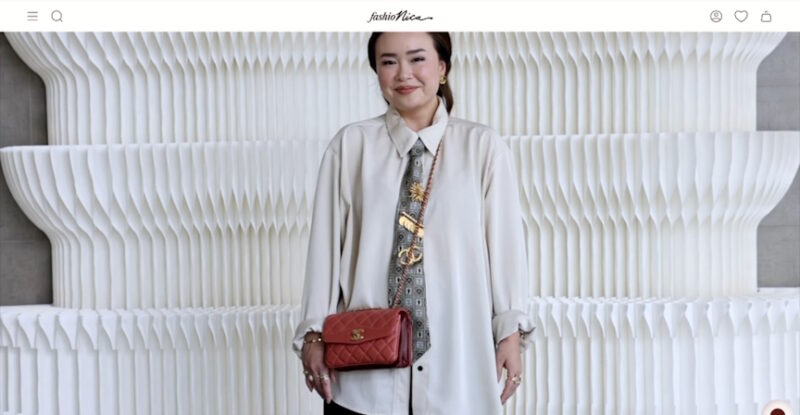
FashioNica is a curated resale shop founded by Nica Yusay in Irvine, California, that releases a small, hand-picked batch of authenticated pre-owned and vintage designer bags every Wednesday at 7:00 PM PT. The format is intentional: drops are typically 20 to 30 bags and can sell out within minutes, so buyers follow the shop the way collectors follow a gallery.
Authentication is the clearest differentiator. Every piece goes through an in-house inspection of materials, serial numbers, stitching, and hardware, and is then verified by a named third-party service. Shoppers browsing the FashioNica vintage handbag selection will find listings that state the production year, hardware finish, and a condition grade (Mint, Excellent, Very Good, or Good) alongside those third-party verification results. A 12-month, 100% money-back authenticity guarantee covers every certified piece after delivery.
The brand carries Chanel, Hermès, Louis Vuitton, Gucci, Dior, Fendi, Bottega Veneta, Balenciaga, Celine, Loewe, Prada, and Saint Laurent. Pricing spans $449 to $11,299, with the bulk of pieces falling between $1,200 and $4,500. As of September 2026, the shop holds a 4.88 out of 5 rating drawn from 489 customer reviews, and it’s earned coverage from CNBC and Vogue Business. Drops stream live on Whatnot and TikTok too, so buyers can watch a bag on camera before pulling the trigger.
2. Vintasje
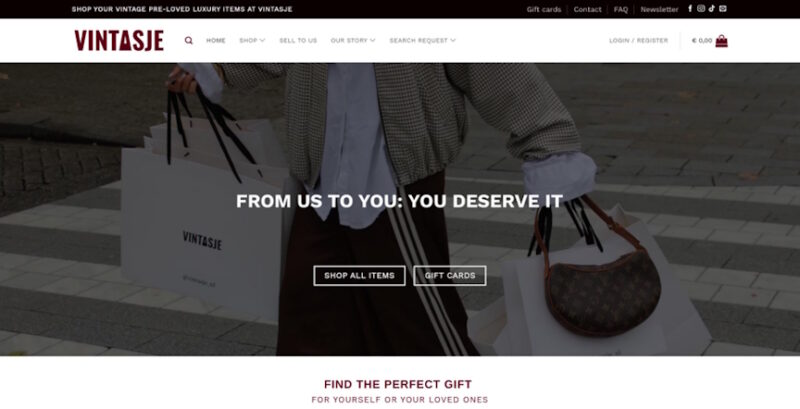
Founded in 2021 by Bo and Cilla, Vintasje is a Dutch preloved designer webshop based in Eindhoven that ships internationally. Its focus stays narrow: Gucci, Louis Vuitton, Chanel, and similar high-end houses, all sourced and inspected by the founders personally. They’ll only list pieces they’d wear themselves, a self-imposed standard that keeps inventory small and deliberate.
Each item clears a hands-on verification before it goes live on the site. New arrivals drop on Sundays, giving the shop a rhythm that feels more like a weekly release than a rolling feed. Accepted payment methods include iDeal, Bancontact, credit card, and PayPal. Vintasje has grown a following of 58,000 on Instagram and picked up editorial mentions in Cosmopolitan Netherlands and Linda Meiden, real proof of reach well beyond its home market.
One practical note for US buyers: the shop ships from the Netherlands, so duty costs and delivery times are worth factoring in before checkout.
3. RDB Vintage
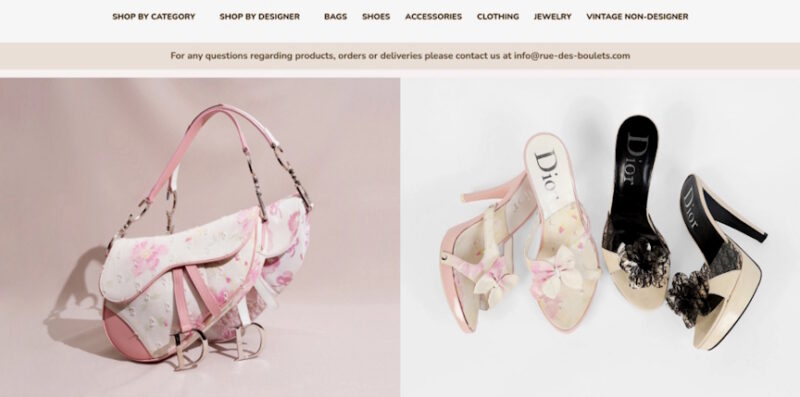
RDB Vintage launched in 2019 and is named after the Rue des Boulets metro stop near Paris’s 11th Arrondissement, and everything sold there is sourced in that city. The catalog covers Chanel, Christian Dior, Fendi, Louis Vuitton, Prada, and Yves Saint Laurent, with items ranging from several hundred to just under €12,000 depending on piece and condition. Authenticity is guaranteed on every listing.
The Paris sourcing is a genuine point of difference. Vintage luxury goods pulled from French estate and market channels carry a kind of provenance that mass-aggregator sites simply can’t match. RDB Vintage ships worldwide, and first-time buyers can apply the code NEWRDB50 for €50 off. The shop counts 27,000 Instagram followers and runs a clean e-commerce model, no auction format, no peer-to-peer listings.
US buyers should note that prices are listed in euros, so exchange-rate shifts affect what they’ll actually pay at checkout.
4. Lola Saratoga
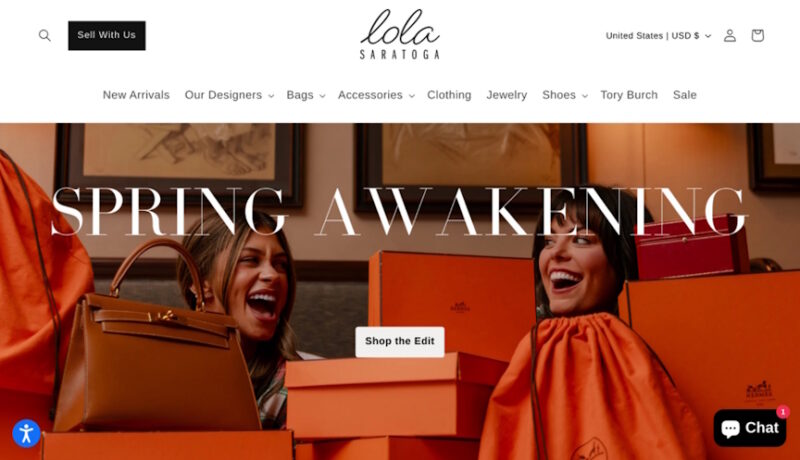
Lola Saratoga is a brick-and-mortar luxury consignment business founded in 2013 by Megan Druckman in Saratoga Springs, New York, with a second location at Stuyvesant Plaza in Albany. The physical presence matters: buyers can walk in, handle a bag, and make a decision in person, an option that online-only platforms simply can’t offer.
Authentication runs through a multi-point inspection, then a third-party certificate of authenticity for every handbag. The brand centers on Louis Vuitton, Chanel, Gucci, Prada, Hermès, and YSL, and also stocks contemporary accessories from Tory Burch, Gorjana, and Linda Richards. Sellers can submit pieces through Trendful via the “Sell With Us” button; the buying team responds within one to two business days with a quote. From there, options break down into direct buyout, consignment, or store credit.
Lola Saratoga also holds exclusive retailer status for Tory Burch, Rebecca Minkoff, Naghedi, and Gorjana in its market. For buyers outside upstate New York, the shop does not operate as a primarily online retailer, so inventory visibility is limited unless you visit.
5. 1stDibs
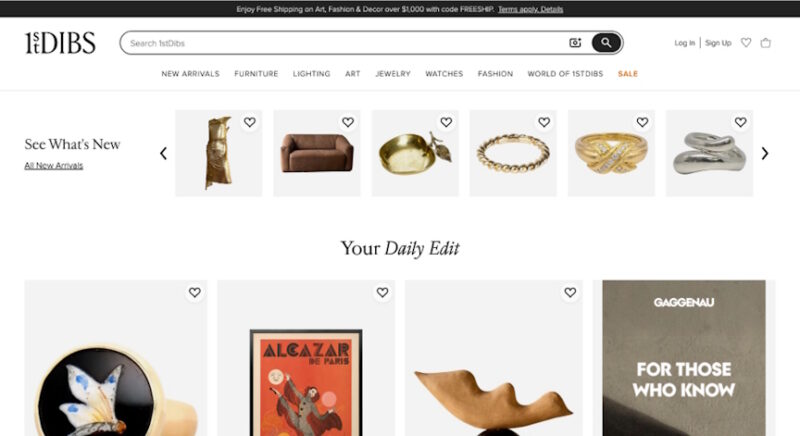
1stDibs is a publicly traded luxury marketplace (Nasdaq: DIBS) founded in 2000 by Michael Bruno after he visited the Marché aux Puces in Paris. Headquartered in New York City, it connects buyers with around 4,000 vetted dealers across 28 countries and covers vintage handbags alongside furniture, art, jewelry, and watches.
The authentication model works at the dealer level, every seller goes through a formal application and vetting process before they’re permitted to list anything. That structure cuts the risk of fakes without requiring 1stDibs to inspect each individual item. It works at scale too; buyers regularly purchase five- and six-figure pieces sight unseen because the dealer network carries the accountability.
The Trade Program is worth knowing for serious or repeat buyers: it offers volume pricing, dedicated account management, and invoicing tools, which is why designers and collectors keep coming back. 1stDibs went public in June 2021, raising $112 million at a valuation of roughly $773 million. No platform on this list matches its breadth of inventory, and none matches its price range, either.
What Authentication Actually Means on These Platforms
“Authentication guaranteed” shows up on a lot of resale sites, but that phrase can mean vastly different things in practice. At one end sits a single in-house check by someone familiar with the brand. At the other end is a dual-layer system where an internal team inspects the piece and a named third-party service – Entrupy, LegitGrails, CheckCheck, or RealAuthentication – runs an independent verification before any certificate of authenticity gets issued.
The specifics matter. Ask whether the guarantee is backed by money-back terms, and for how long. A 12-month window is meaningfully different from a guarantee that expires at delivery. Also check whether the platform names its authentication partners, vague language like “a team of experts verifies each piece” is harder to evaluate than a named tool or service. Third-party certificates also help if the buyer resells later; a certificate from a recognized authenticator adds documented provenance to the bag.
Peer-to-peer platforms are a separate category. On open marketplaces, sellers authenticate their own listings, which creates obvious conflicts of interest. The shops on this list all operate as curated or vetted sellers, which removes at least one layer of that risk.
Bottom Line
Buyers after vintage designer bags with genuine authenticity backing have far more solid choices now than they did five years ago. The right platform really comes down to how you shop: weekly curated drops with livestream access, Parisian estate finds, physical consignment in New York, or a vetted dealer network.